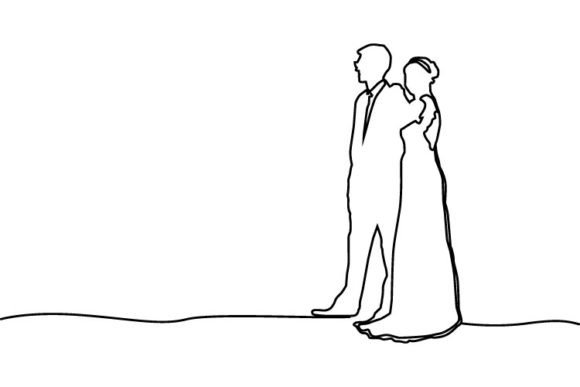
Abstract Monoline Illustration Wedding: A Designer's Guide
When you're tasked with capturing the romance and elegance of a wedding in a visual asset, you need more than just a standard image. You need a design element that breathes emotion while maintaining a clean, professional structure. This is where the Abstract Monoline Illustration Wedding style truly shines. It isn't just a collection of lines; it is a sophisticated approach to visual storytelling that balances artistic flair with commercial utility. For designers, entrepreneurs, and content creators, understanding how to leverage this specific aesthetic can elevate a project from generic to memorable.
The Visual Character of Monoline Art
At its core, Abstract Monoline Illustration Wedding design relies on the "one-line" concept. The visual characteristics are defined by continuous, unbroken strokes that form recognizable shapes—often a wedding couple—while leaving significant negative space. This style creates a sense of fluidity and connection. Unlike heavy, filled vector graphics, monoline illustrations feel airy and modern. The personality of these assets is inherently romantic yet minimal. They avoid the clutter of traditional vintage wedding motifs, offering instead a sleek, contemporary look that appeals to modern couples and brands.
The appeal lies in the balance. The "abstract" element means the illustration doesn't try to be photorealistic. Instead, it suggests forms and emotions through clever line placement. This abstraction allows the design to function as a versatile background or a standalone focal point without overwhelming the surrounding content. Whether you are using a serif font for classic elegance or a sans serif font for a modern edge, these illustrations complement the typography rather than competing with it.
Strategic Applications Across Industries
Understanding where the Abstract Monoline Illustration Wedding style works best is key to maximizing its value. Because the assets typically come in versatile formats like Ai, Eps, Svg, Png, and Jpg, they are ready for almost any medium you can imagine.
Digital Presence and Social Media
In the realm of web design and social media graphics, attention spans are short. A complex, busy background can make text illegible and drive users away. An abstract monoline illustration acts as a perfect, subtle backdrop. It adds texture and depth to an Instagram post or a website hero section without creating visual noise. For bloggers and content creators in the lifestyle or wedding niche, using these illustrations helps establish a consistent brand identity. It signals to the audience that the content is curated, stylish, and high-quality.
Print, Packaging, and Editorial Design
For those involved in editorial design or packaging design, the scalability of vector files (Ai, Eps, Svg) is a game-changer. You can scale a line drawing of a wedding couple to fit a massive billboard or shrink it down for a delicate favor tag without losing resolution. Imagine a wedding planner using this illustration style for menu cards, programs, or table numbers. The consistent line weight creates a unified visual hierarchy across all print materials. Small business owners selling handmade goods can use these illustrations on packaging to instantly communicate a premium, artisanal feel.
Logo Design and Brand Identity
A monoline illustration is an excellent starting point for logo design. The simplicity of the lines ensures that the logo remains legible when embossed, foil-stamped, or printed in a single color. For a wedding venue, a photography studio, or a boutique event planner, incorporating an abstract monoline element into the brand identity creates a sophisticated mark. It moves the brand away from cliché imagery and toward a more modern typography and design language.
Influence on Design Hierarchy and Engagement
How does a specific illustration style influence things like readability and audience engagement? It comes down to visual hierarchy. In design, hierarchy guides the viewer's eye. A heavy, dark illustration creates a barrier. In contrast, the thin, continuous lines of an Abstract Monoline Illustration Wedding asset create a path. They guide the eye gently across the page or screen.
This style supports readability rather than hindering it. By using these illustrations as background elements or accents, you allow your primary content—be it a headline or a call-to-action—to stand out. This fosters better engagement because the user isn't struggling to find the message. Furthermore, consistency is vital for brand perception. Using a cohesive set of monoline illustrations across your marketing materials builds recognition. Over time, your audience will associate that specific artistic style with your brand's professionalism and aesthetic values.
Practical Guidance for Implementation
If you are considering integrating these assets into your workflow, here are a few practical observations on how to choose and use them effectively.
Evaluating Project Fit
Before purchasing or downloading a premium font or illustration pack, assess the mood of your project. Abstract monoline art is versatile, but it leans towards elegance and modernity. If your project requires a rugged, grunge, or hyper-traditional look, this style might feel out of place. However, for projects requiring a touch of sophistication, it is rarely a miss. Look at the specific poses of the couple in the illustration. Do they convey the emotion you need? Sometimes the angle of the heads or the curve of a hand can change the entire narrative.
File Formats and Usability
The inclusion of Ai, Eps, Svg, Png, and Jpg files is standard for high-quality design assets, but you need to know which to use. If you are a crafter using a machine like a Cricut or Silhouette, the Svg or Png files are your best friends. If you are a professional graphic designer working in Adobe Illustrator, the Ai or Eps files allow you to manipulate the anchor points. You might want to adjust the thickness of the line to match a specific script font or handwritten font you are using for the project.
Font Pairing Strategies
Typography pairing is crucial when using illustrative elements. Because Abstract Monoline Illustration Wedding designs are linear and open, they pair beautifully with a wide range of typefaces. For a high-fashion editorial look, try pairing the illustration with a tall, condensed sans serif font. If you want to emphasize the romantic aspect, a flowing script font works well, but be careful not to choose one that is too ornate, as it might tangle visually with the illustration lines. A clean serif font often provides the best balance, offering structure to contrast the fluidity of the monoline art.
Customization and Color
Don't feel locked into black or white. One of the advantages of vector-based monoline design is the ability to change the stroke color easily. Consider using a metallic gold or a soft blush pink to align with a specific wedding palette. You can also use the illustration as a "knockout" element, where the background shows through the lines. This technique works exceptionally well in packaging design and magazine covers, adding a layer of depth and texture that feels expensive and intentional.
Ultimately, the Abstract Monoline Illustration Wedding style is more than just a trend. It is a functional, aesthetic tool that bridges the gap between artistic expression and commercial clarity. Whether you are a small business owner looking to upgrade your packaging or a designer building a comprehensive brand identity, these assets offer the flexibility and elegance needed to create impactful visual communication. By focusing on the quality of the line and the versatility of the file formats, you can ensure your next project feels both professional and deeply personal.